Safety
Safety is the first conversation, not the last.
If you're wondering whether home birth is safe, brilliant. That's the right question. Here is the evidence, how we keep you safe, what happens if we need to uplevel care, and the films, resources and research that changed skeptics' minds.
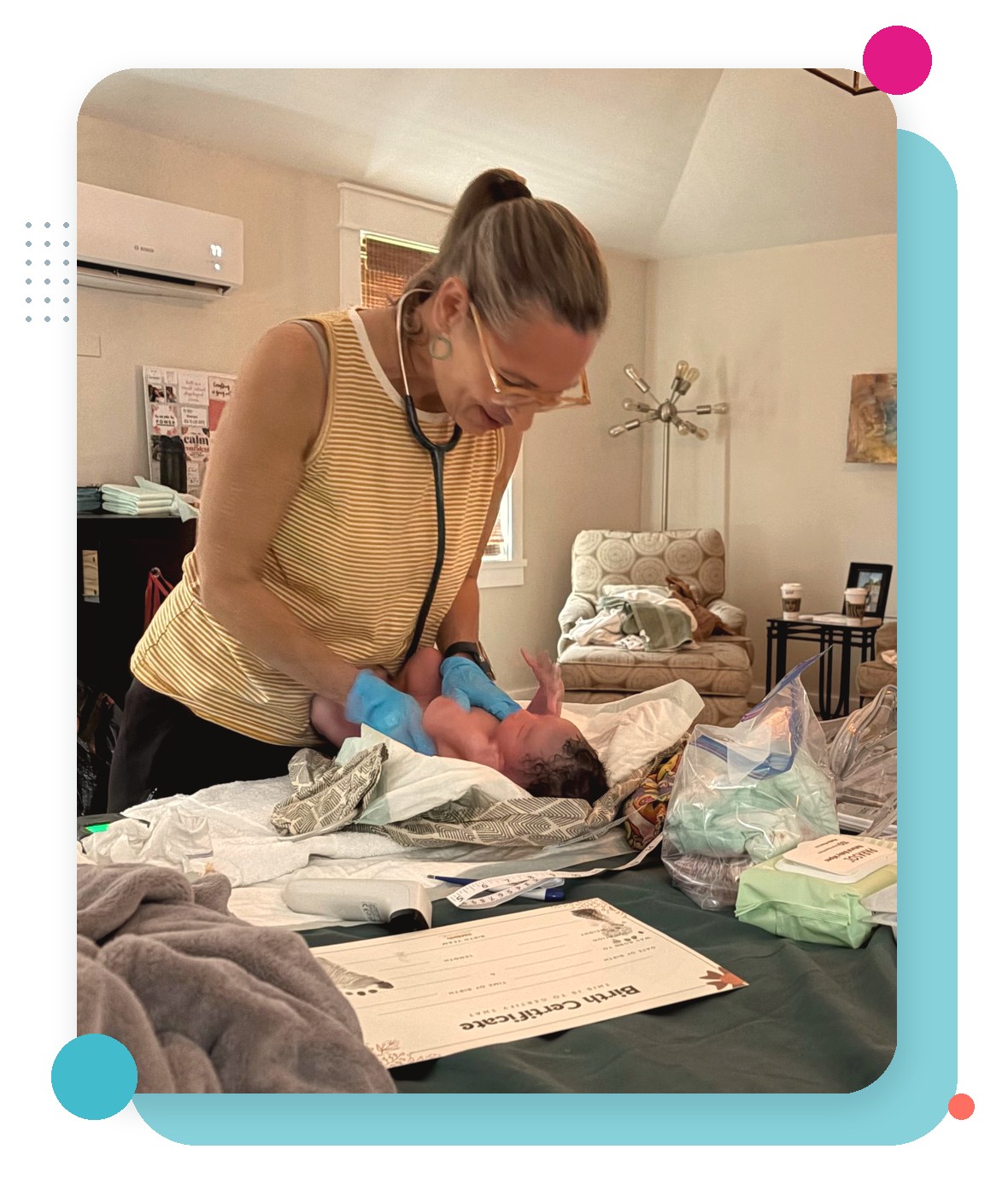
The evidence in brief
What we know, and what we don't.
Good safety information includes the hard parts. Here are the strongest findings in plain language.
| Study | What it found | What it means for you |
|---|---|---|
| Cochrane Review, 2023 | There aren't enough randomized trials to settle the question. But the better-quality observational research finds that, for low-risk families, planned hospital birth doesn't reduce deaths or complications. It mostly adds more interventions. | The world's most respected evidence review sees no safety advantage to hospital birth for healthy, low-risk pregnancies with a skilled midwife and hospital backup. |
| Hutton et al., 2019 | ~500,000 planned home births in 8 countries. No difference in the risk of a baby dying around birth compared with low-risk planned hospital births. | For healthy, low-risk pregnancies with a trained midwife and a working transfer system, home is a safe place to give birth. |
| Birthplace in England, 2011 | For people who had given birth before, planned home birth was as safe for babies as hospital, with far fewer interventions. For first-time parents, serious outcomes were rare but somewhat more common at home. | If this is your first baby, we talk about this openly. It shapes how we plan, screen and decide when to transfer. |
| MANA Stats, 2014 | 16,924 planned U.S. home births: 93.6% vaginal birth, 5.2% cesarean, 89% gave birth at home. Breech, twins and some other risk factors raised risk. | Screening matters. Low-risk pregnancies do very well at home. |
| National Birth Center Study II, 2013 | 15,574 births in 79 U.S. birth centers: 93% spontaneous vaginal birth, 6% cesarean, fewer than 2% emergent transfers, no maternal deaths. | Birth center care keeps intervention low while outcomes for babies match other low-risk studies. |
| Bovbjerg et al., 2022 | 35,060 home and birth center births. Water birth showed no increase in newborn death, fewer hemorrhages and fewer hospitalizations, with more cord snapping and slightly more uterine infection. | Water birth at home is a reasonable choice for low-risk families when the midwife knows the technique. |
| Strong Start, 2018 | Medicaid families in birth center care had fewer preterm births (6.3% vs 8.5%), fewer cesareans (17.5% vs 29%) and twice the VBAC rate. | Midwifery care outside the hospital improves outcomes for families with more risk, too. |
Questions answered · videos coming
The questions every family asks me.
Open any topic to read it in full. Each one will become a short video.
“Is home birth actually safe?”
If I were you, this would be my first question too. And I'd want a real answer, not reassurance.
The evidence. Cochrane, the world's most respected source of evidence reviews, says there aren't enough randomized trials to settle the question. But the better-quality research finds that hospital birth doesn't reduce deaths or complications for low-risk families. It just adds more interventions.
The largest review we have looked at about half a million planned home births across eight countries. For healthy, low-risk pregnancies, the chance of a baby dying around the time of birth was no different at home than in the hospital, where midwives are well connected to hospitals, which is exactly how I practice.
Most families who plan a home birth have one. In the largest U.S. study, 89% of families who planned a home birth gave birth at home, and it's even higher if you've given birth before.
Far fewer interventions. Compared with similar low-risk families planning a hospital birth, families planning a home birth were much less likely to have a cesarean, a vacuum or forceps birth, an epidural, an episiotomy, Pitocin to speed up labor, or an infection after birth. They also had fewer severe perineal tears, especially families who had given birth before.
Labor starts on its own at home, so there are no medical inductions. Continuous electronic monitoring isn't routine. We listen to your baby with a handheld Doppler, and you can eat, drink and move however feels right.
Your family is at the center. Partners often help catch the baby. Siblings can be part of the day. And every decision is made together, from your first visit to your six-week postpartum visit.
The honest part. Safety at home depends on three things: you being low-risk, your midwife being skilled and prepared, and a plan to get to the hospital quickly if we need to. For first-time parents, large studies show a small increase in serious outcomes for babies, so we talk about that openly and plan around it.
Safe isn't a place. It's a set of decisions we make together at every visit.
Sources: Cochrane 2023; Hutton et al. 2019; MANA Stats 2014; Reitsma et al. 2020.
“What if something goes wrong?”
Most transfers from home to hospital aren't emergencies. They're decisions.
How we think about risk: the pink flags
All through pregnancy, labor and postpartum, we watch for small signs that something is shifting. We call them pink flags, and we talk about them with you openly.
⚑ One pink flag is something interesting. We'll pay attention to it and try to nudge things back toward wellness.
⚑⚑ Two pink flags still doesn't mean transfer. It means we're keeping a vigilant eye on what's happening and working to nudge things back into the range of normal.
⚑⚑⚑ Three pink flags doesn't necessarily mean an urgent transfer, but it does mean the level of risk has gone up, and it would be appropriate to transfer to the hospital in a calm, non-urgent way.
This way, you're never surprised. You'll know where we are, what we're watching, and why.
The most common reason for transfer is a long labor where you're exhausted and want rest or an epidural. We see it coming hours ahead, talk it over, and drive in calmly. True emergencies are rare, and at most births there are two midwives, not a midwife and an assistant, with always at least two NRP-certified attendants. We carry oxygen, hemorrhage medications and IV supplies to handle the first critical minutes. We're also trained in shoulder dystocia, breech birth and the other birth emergencies that are uncommon but possible, through Birth Emergency Skills Training (BEST) and Mercy in Action's hands-on emergency drills.
- We choose your hospital together before labor.
- I call ahead so the team knows who's coming and why.
- I come with you, bring your records, and hand off care in person.
- I stay as your advocate and support.
If I were you, I'd want a midwife who transfers early rather than late. That's me.
“Who shouldn't have a home birth?”
A good midwife isn't one who says yes to everyone. It's one who knows when to say “not this time.”
From your first visit, I'm screening for things that change the safety picture: high blood pressure or preeclampsia, a baby measuring very small, a placenta covering the cervix, labor starting too early, or certain medical conditions. Twins and breech babies carry more risk at home, and the U.S. data shows it.
If something comes up, I explain what it means and what the evidence says. Sometimes we add an obstetric consult. Sometimes your care moves to the hospital, and I can stay alongside you for support.
“Is water birth safe for my baby?”
Water is one of the most powerful comfort tools in birth. People call it the midwife's epidural.
Your birth pool is on us. I provide the birth pool along with your birth kit, at no extra expense to you.
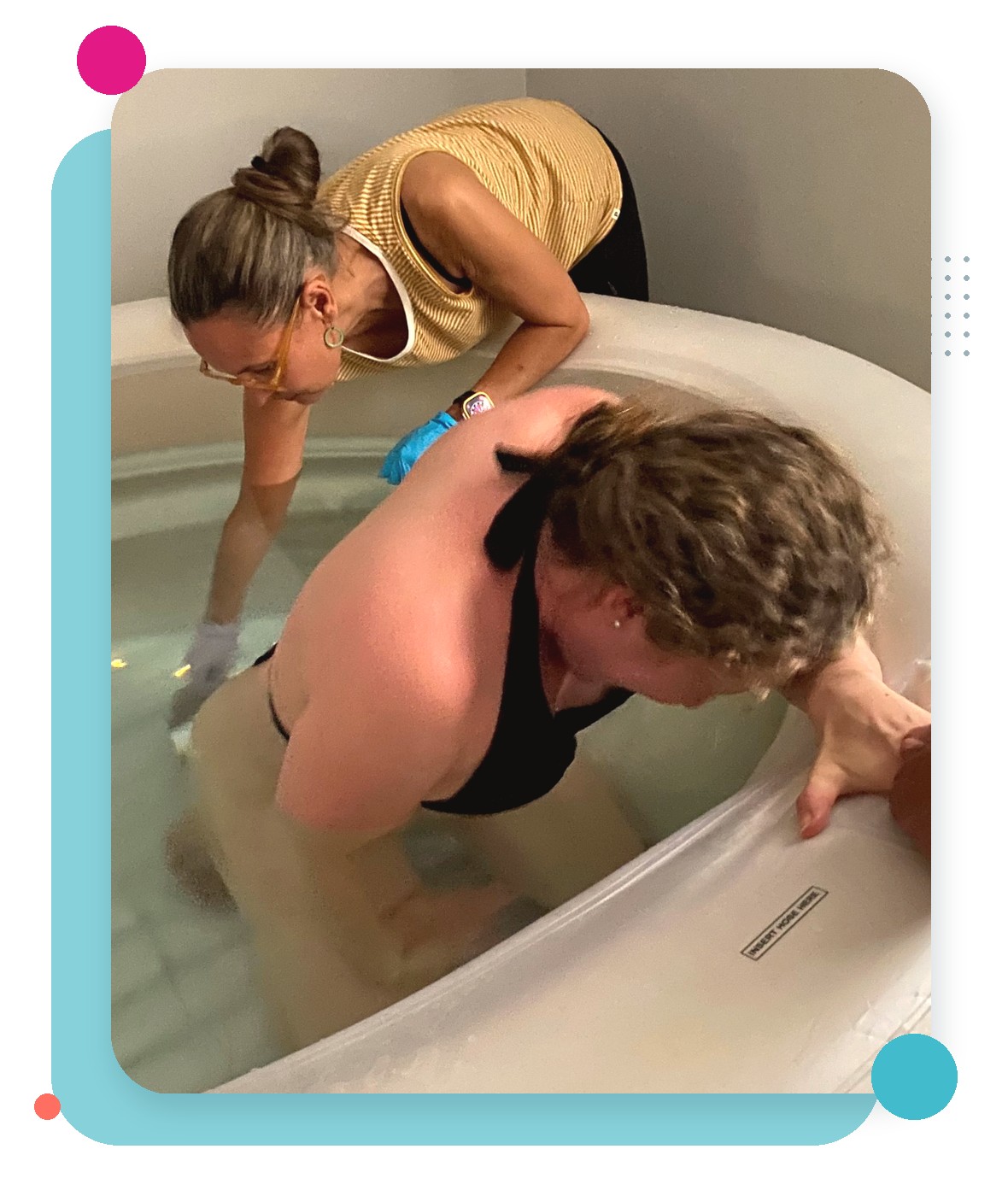
The largest water birth study ever done looked at more than 35,000 births at home and in birth centers, the same settings where I practice. Babies born in water had no increase in newborn death. Parents had fewer hemorrhages and were less likely to end up in the hospital in the weeks after birth.
The one caution: more umbilical cord snapping and slightly more uterine infections. Both are uncommon. We prevent them by bringing the baby up gently, watching the cord, and keeping the water clean and warm.
If I were you, I'd plan for water and see how it feels in labor. You can always get out.
“What does informed refusal really mean?”
You can't truly say yes unless you're allowed to say no.
Before any test or procedure, you deserve to hear what it is, why it's offered, the benefits, the risks, the alternatives, and what happens if you wait or decline. Then the choice is yours, and it's respected.
We talk through choices before they're urgent: ultrasounds, glucose testing, Group B strep, cervical checks, newborn procedures. You'll get the research and my honest recommendation. If you decline, we document it together and keep caring for you.
Remember the question that changes every conversation: “What happens if we don't?”
“What is trauma-informed care?”
Safety isn't only about outcomes. It's also about whether you felt safe.
- I ask before I touch. Every time.
- Exams are offered, not assumed, and you can pause or stop at any point.
- You choose positions, who's in the room and how we talk about your body.
- You never have to share your history to receive this care.
A birth can be both physically safe and deeply respectful. You deserve both.
Prepared for the unexpected
What comes to every birth with me.
Home birth isn't “no equipment.” It's the right equipment, in skilled hands, without the routine use that leads to more intervention.
Newborn resuscitation
Oxygen, resuscitation equipment and NRP certification for the first critical minutes if a baby needs help breathing.
Bleeding control & IV
Postpartum hemorrhage medications as permitted under my Illinois license, IV supplies and fluids, and the hands-on skills to manage bleeding.
Two midwives at most births
Not a midwife and an assistant: at most births, two midwives, and always at least two NRP-certified attendants, so one can care for you while the other cares for your baby.
Monitoring
A handheld Doppler for baby's heart rate, plus your blood pressure, pulse and temperature throughout labor.
A transfer plan
Your chosen hospital, the route, and a call-ahead plan, all set before labor begins.
Water birth supplies
A birth pool, thermometer and the know-how to keep both of you safe in the water. The pool comes with your birth kit, at no extra cost.
Trained for the rare, but possible
Beyond NRP certification, our team trains specifically for the emergencies that are uncommon in birth but possible, including shoulder dystocia, breech birth and postpartum hemorrhage, so our hands know exactly what to do if a moment ever calls for it.
- Birth Emergency Skills Training® (BEST): the longest-running emergency skills course for community midwives, with hands-on simulations for shoulder dystocia, breech, postpartum hemorrhage, newborn resuscitation and stabilizing for transport.
- Mercy in Action: a 5-day, in-person training of hands-on emergency drills, practicing for births in both high-resource and low-resource settings.
We practice these skills regularly, because the best time to rehearse an emergency is long before you ever need to.
Questions to ask any midwife
- How many births have you attended as the primary midwife?
- What is your transfer rate, and the most common reasons?
- Which hospital would we transfer to, and how do you work with them?
- What emergency equipment and medications do you bring?
- Who else attends the birth with you?
- What conditions would mean I'm not a good fit for home birth?
- How long are prenatal visits, and how many postpartum visits are included?
- How do you handle it if I decline a test or procedure?
- What does your care cost, and what's included?
The BRAINN of any decision
Use this whenever a test or procedure is offered, at home or in the hospital.
BBenefits: What is this for, and how likely is it to help?
RRisks: What could go wrong, and how often?
AAlternatives: What else could we try?
IIntuition: What is my gut telling me?
NNothing: What happens if we wait, or don't do it at all?
NNext: What steps or interventions may be bundled with this choice?
For the skeptics
Films that changed people's minds.
If you, your partner or your mother-in-law thinks home birth is reckless, start here.
Start with these three
2008
The Business of Being Born
Ricki Lake and Abby Epstein follow American birth from the hospital system to midwife-attended home births.
Best for: anyone who's never questioned how U.S. maternity care works.
2016
Why Not Home?
Doctors and nurses who attend hospital births explain why they chose to give birth at home.
Best for: the partner or parent who trusts medical professionals most.
2026
Allowed to Birth
Autonomy, policy and physiological birth around the world.
Best for: anyone ready to rethink who is “allowed” to decide.
More to explore
2005 · Water birth · 10 min
The Birth of Sabine
From Andaluz Waterbirth Center, where Heather began practicing: a first pregnancy from positive test to prenatal visits to a water birth, with Dad helping to catch.
2011 · 4-part series
More Business of Being Born
Ricki Lake and Abby Epstein's follow-up, with conversations with Ina May Gaskin, birth stories, and a closer look at birth options and interventions.
2011 · VBAC
The VBAC Dilemma: What Your Options Really Are
Part 4 of More Business of Being Born, following families planning a VBAC, including filmmaker Abby Epstein after her first cesarean.
VBAC
Trial of Labor
Four women seeking a vaginal birth after cesarean, navigating VBAC bans, care provider policies and healing from past births.
2015 · Hospital midwives
The Mama Sherpas
How midwives working inside hospitals change the birth experience, including a deeply moving VBAC.
2004 · Narrated by Noah Wyle
What Babies Want
How babies experience pregnancy, birth and their first days, and why a gentle, connected welcome matters for bonding and lifelong wellbeing. Now offered by APPPAH.
2005 · Doulas
A Doula Story
A community doula who once struggled as a teen mom returns to her neighborhood to support young mothers.
2010 · Doulas
Doula! The Ultimate Birth Companion
Up-close footage of birth and postpartum doulas at work: the practical, emotional support they give before, during and after birth.
Doulas
Bloom
Three expectant parents and their doulas on a journey toward safe, confident childbirth. Screened at the DONA International Summit.
Keep exploring
How care with me works
Hour-long visits, informed choice, two midwives at most births, and four postpartum home visits.
See the care model →Ways to work together
Home birth care, midwifery care alongside a hospital birth, pay-as-you-go visits and classes.
See services →Your care circle
The pediatricians, chiropractors and acupuncturist I refer to, plus national research and advocacy groups.
Meet the circle →Not sure where to give birth?
Birth Guide Chicago helps families compare birth settings, philosophies and providers. Their quiz is a great first step, whether that's home, a birth center or a hospital.
Still have questions?
Bring them to a free consult. Skeptics especially welcome.
And if something ever feels wrong, in pregnancy or after, tell someone. Trusting that feeling is part of staying safe.